
SOP Group is committed to no deforestation, no new development on peat, and the protection of High Conservation Value (HCV) areas, in line with the its Oil Palms Sustainability Policy.
In 2015, the Group signed a collaboration agreement with the Malaysian Palm Oil Board (MPOB) and Universiti Malaysia Sarawak (UNIMAS) to establish its inaugural forest conservation project, the Tinbarap Conservation Area (TCA) in Beluru. The TCA initially covered 210 hectares and has since expanded to 216 hectares.
Since its establishment, the TCA has served as a key site for HCV restoration, forest rehabilitation and biodiversity conservation. In 2018, the Group established its first conservation nursery at Tinbarap 5 Estate to support enrichment planting and the propagation of native species. The nursery continues to provide planting material for rehabilitation and enrichment programmes across the Group.
The TCA enrichment planting programme commenced in 2019 in collaboration with the Sarawak Forestry Corporation (SFC) and continued through 2022. Against an initial target of 5,000 native trees, more than 12,800 trees representing seven indigenous species were successfully planted across the conservation area. The programme has strengthened forest regeneration, restored habitat and enhanced ecological connectivity, while providing practical experience for the Group’s wider forest rehabilitation initiatives.
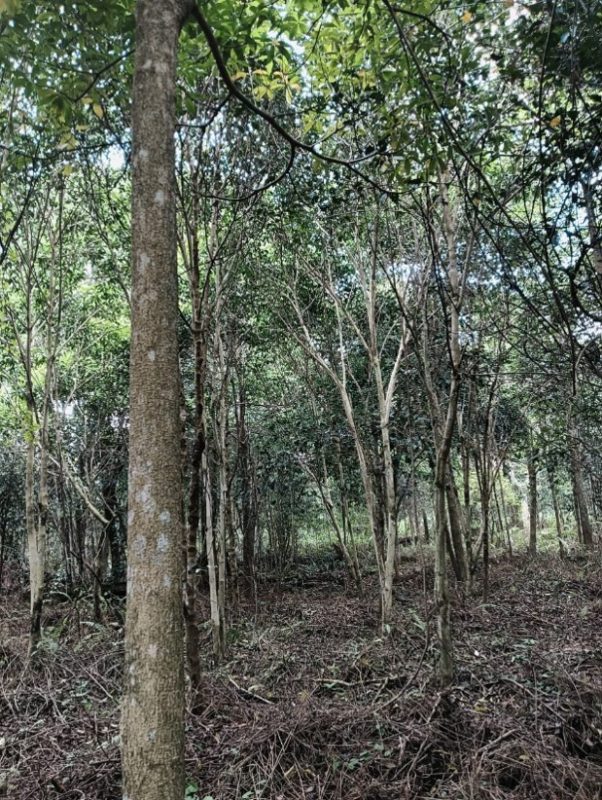
TCA Enrichment Site. Photo Taken in 2025
In 2023, Sungai Pudu, located in the northern part of Tinbarap Estate, was selected as a pilot site for riparian rehabilitation. A 0.6-kilometre stretch was rehabilitated through the planting of native species propagated from seeds and seedlings collected within the TCA. Building on this experience, the Group expanded riparian rehabilitation to Sg. Balim Estate, Sg. Trus Estate and Lambir 2 Estate. These initiatives now cover approximately 23 kilometres of riparian corridors and will continue to be extended to other areas identified through ongoing environmental assessments. The programme supports riverbank stability, water quality and habitat connectivity across the plantation landscape.
CORRECT AS OF 24 SEPTEMBER 2026